
To clean a stainless steel coffee pot, match the cleaner to the problem. For brown coffee stains and oily film, fill the pot with hot water, add a dishwasher detergent tablet or two denture-cleaning tablets, let it soak overnight, then rinse well. For white, chalky mineral scale, soak it in equal parts white vinegar and warm water for 15 to 30 minutes. For a quick spot clean, scrub with a baking soda paste and a soft bottle brush. Skip chlorine bleach and steel wool on any stainless pot.
Table Of Contents
−- Quick answer: which cleaning method to use
- First, check which kind of stainless pot you have
- What you need
- Method 1: Overnight soak for stubborn coffee stains
- Method 2: Baking soda paste for light stains
- Method 3: Vinegar soak for white mineral scale
- Method 4: Remove stale smells
- Method 5: A coffee pot cleaner for regular upkeep
- How to clean a burnt stainless steel coffee pot
- What not to use on a stainless coffee pot
- How to keep your coffee pot from staining
- FAQ
- Next steps
Crazy Coffee Crave is reader-supported. When you buy through links on this page, we may earn an affiliate commission at no extra cost to you.

Quick answer: which cleaning method to use
| What you see or smell | Best method | Time | Source for the method |
|---|---|---|---|
| Brown stains, dark ring, oily film | Dishwasher detergent or 2 denture tablets in hot water | Overnight | Moccamaster, Thermos |
| Light stains you can reach with a brush | Baking soda paste, gentle scrub | 10 to 15 minutes | Stanley |
| White, chalky crust (mineral scale) | Equal parts white vinegar and warm water | 15 to 30 minutes | Stanley, Thermos |
| Stale or sour smell | 1 to 2 tablespoons baking soda in warm water, or lemon juice | 30 minutes to overnight | Thermos |
| Regular upkeep in an office or busy kitchen | Coffee pot cleaner such as Urnex Clearly Coffee | A few minutes | Urnex |
First, check which kind of stainless pot you have
The right method depends on whether your pot is insulated. Most stainless coffee pots fall into one of two groups, and they need slightly different care.
- Thermal carafe (double-wall, vacuum insulated): the pot that comes with many drip coffee makers, plus pump pots and serving carafes. Clean it by filling the inside only. Don’t submerge the whole carafe (Zojirushi, for one, says not to soak its vacuum bottles) or put it on a burner, and check the manual before using a dishwasher; Moccamaster, for example, advises against putting its carafe in the dishwasher because high heat can make parts brittle.
- Single-wall stovetop pot: a stovetop percolator, cowboy coffee pot or stainless serving pot. It’s tougher, so you can scrub harder and soak the outside too, but the same no-bleach, no-steel-wool rules apply.
Not sure which you have? Vacuum-insulated carafes stay cool, or only slightly warm, on the outside when full of hot coffee. Our guide to thermal vs glass carafes explains how they keep coffee hot. Glass carafes clean differently and are not covered here.
What you need
- A long, soft bottle brush that reaches the bottom of the pot. A kitchen sponge clamped in tongs works in a pinch.
- Hot tap water, not boiling, for soaks.
- One cleaner from the methods below, picked by the problem you have.
- A towel and a spot to let the pot dry with the lid off.
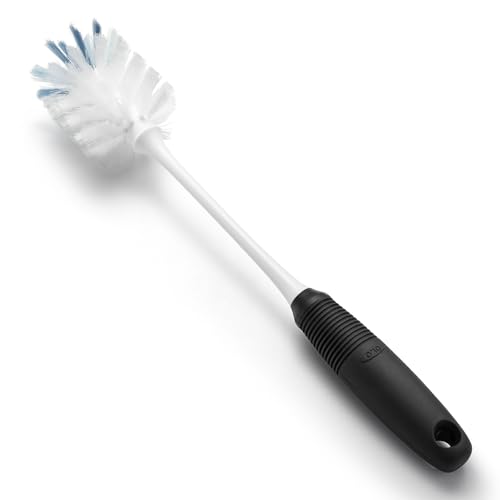
The OXO Good Grips Bottle Brush is a good fit for this job: OXO sells it for bottles, pitchers and carafes, with a flexible neck and dual bristles it describes as safe for delicate glassware. Skip it if your pot has a wide mouth you can reach into with a sponge.
Method 1: Overnight soak for stubborn coffee stains
An overnight soak with dishwasher detergent or denture tablets is the easiest way to lift dark coffee stains and oily film, because the cleaner does the work and you barely scrub. Both options come straight from manufacturers: Moccamaster recommends dishwasher detergent for built-up residue in its thermal carafes, and Thermos says coffee pot cleaner or denture tablets usually work best for stubborn stains and odors.
With dishwasher detergent

- Add a scoop of dishwasher powder, or one dishwasher tablet, to the empty pot.
- Fill the pot with hot water and swirl to dissolve.
- Leave it overnight with the lid off.
- Pour it out and rinse several times with warm water until there is no soapy smell.
- If a faint ring remains, repeat the soak or finish with a quick baking soda scrub (Method 2).
Use dishwasher detergent as an occasional deep clean, not a daily habit. Stanley warns that heavy-duty dishwasher detergents can dull finishes or leave a film, so a thorough rinse matters.
With denture tablets

- Drop two denture-cleaning tablets into the pot.
- Fill with hot water.
- Soak overnight, as Thermos suggests, or at least until the fizzing stops.
- Wash with dish soap and water, then rinse well.
Denture tablets are the gentler pick if you’d rather avoid strong detergent. Skip them if stains are very old and thick; a detergent soak usually takes fewer repeats.
Method 2: Baking soda paste for light stains

A baking soda paste is the fastest fix for stains you can reach with a brush. It’s a mild abrasive, and Saki notes it won’t scratch stainless steel when used with a soft sponge.
- Mix about ½ teaspoon of baking soda with a splash of warm water into a thick paste. Make more for a large pot.
- Spread it over the stained areas with your brush.
- Wait 10 to 15 minutes, as Stanley recommends.
- Scrub gently, then rinse thoroughly.
For heavier build-up, Stanley suggests swapping the water for lemon juice: 1 teaspoon of baking soda with enough lemon juice to make a slightly foaming paste, left for 10 to 20 minutes before scrubbing. Skip the paste method on tall, narrow carafes where you can’t see or reach the bottom; a soak works better there.
Method 3: Vinegar soak for white mineral scale

Vinegar is for the white, chalky crust that hard water leaves behind, not for brown coffee stains. Stanley and Thermos both recommend equal parts white vinegar and warm water for 15 to 30 minutes.
- Fill the pot halfway with white vinegar and top it up with warm water.
- Leave it for 15 to 30 minutes.
- Scrub any remaining spots with a bottle brush.
- Rinse several times with clean water until the vinegar smell is gone.
Keep it to a short soak. Stanley advises against leaving cleaners in stainless drinkware indefinitely. If you see scale in the pot, your coffee maker probably has it too; our guide to making a descaling solution for coffee machines covers the brewer itself.
Method 4: Remove stale smells

A sour or stale smell usually means old coffee oils are still clinging to the walls, so clean the stains first. If the smell lingers after that, Thermos recommends 1 to 2 tablespoons of baking soda in warm water, left for at least 30 minutes or overnight for strong odors. Thermos also lists lemon juice as an odor remover. Rinse well and let the pot dry with the lid off.
Method 5: A coffee pot cleaner for regular upkeep
If you clean several carafes a week, as in an office, cafe or church kitchen, a purpose-made coffee pot cleaner is quicker than mixing your own. Urnex says its Clearly Coffee liquid is made for glass and stainless steel brewers and servers and removes coffee oils.
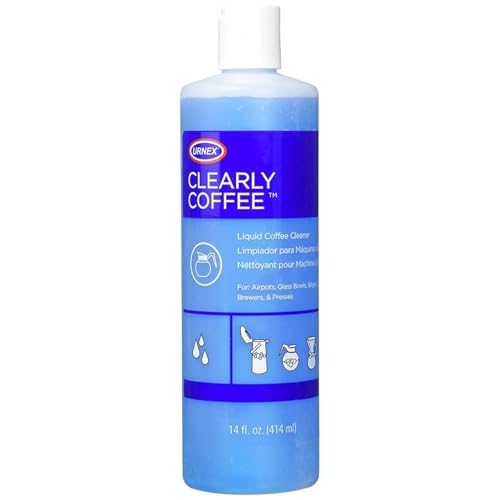
- Add 3 to 4 squirts to the pot (Urnex lists about ¼ oz per gallon).
- Fill with very hot, but not boiling, water.
- Scrub tough stains with a brush.
- Empty and rinse thoroughly, then air-dry.
Downside: it’s one more product to buy and store, and it does nothing a detergent soak can’t do at home. Skip it if you only clean one pot now and then.
How to clean a burnt stainless steel coffee pot
Burnt-on coffee happens when a single-wall pot is left on a burner or hot plate after it runs dry. Start with the gentlest step and only move on if needed.
- Let the pot cool completely. Don’t pour cold water into a hot, empty pot.
- Fill it with hot water and a squirt of dish soap and leave it for an hour to soften the residue.
- Pour out the water, cover the burnt area with a thick baking soda paste and leave it 15 to 20 minutes.
- Scrub with a non-scratch sponge or brush, rinse, and repeat if needed.
- For any remaining shadow, finish with the overnight detergent soak from Method 1.
Thermal carafes don’t go on a burner, so if yours smells burnt, the coffee likely sat too long on the warming plate before it was poured in. Treat it with Method 1.
What not to use on a stainless coffee pot
- Chlorine bleach or cleaners that contain it. Thermos says never to use bleach on its products and explains that chlorine bleach can corrode stainless steel and wear out rubber gaskets. If you want a stain remover, Zojirushi recommends a bleach-free, chlorine-free type.
- Steel wool, scouring pads and harsh scouring powders. Stanley and Thermos both warn they scratch the steel, and scratches make future stains harder to remove.
- Boiling vinegar or water in a thermal carafe. An insulated carafe isn’t made for a burner. Use hot tap water for every soak.
- Long, forgotten soaks. Rinse within the times given above, and overnight at most for detergent or denture tablets.
- Mixing cleaners. Use one method at a time and rinse well before switching to another.
Some older tips also suggest olive oil, salt-and-ice slurries or hydrogen peroxide mixes. They aren’t needed. Oil leaves a greasy film in a pot that already struggles with coffee oils, and the methods above are simpler and backed by the people who make the pots.


How to keep your coffee pot from staining
- Rinse it as soon as it’s empty. Saki and Zojirushi both recommend a rinse after every use, before oils dry onto the walls.
- Wash it daily with mild dish soap. Moccamaster recommends hand-washing its carafe with mild detergent after each use.
- Dry it with the lid off. A closed lid traps moisture inside, so Thermos suggests air-drying with the lid removed.
- Don’t store coffee in it for days. Pour out leftovers the same day, then rinse.
- Deep clean on a schedule. A weekly overnight soak keeps stains from building up; an America’s Test Kitchen writer who uses the detergent soak does it once a week.

FAQ
Can a stainless steel coffee pot go in the dishwasher?
It depends on the pot, so check the manual. Many single-wall stainless pots handle it fine. Insulated carafes vary: Moccamaster advises against putting its carafe in the dishwasher, and Zojirushi says its vacuum bottles should not go in one. Hand-washing is the safe default.
Can I use bleach to clean a stainless coffee pot?
No. Thermos warns that chlorine bleach can corrode stainless steel and degrade rubber gaskets, and it tells owners never to use bleach on its products. Use dishwasher detergent, denture tablets, baking soda or a coffee pot cleaner instead.
Does vinegar damage stainless steel?
Not in a short soak. Stanley and Thermos both recommend a 50/50 vinegar and water mix for 15 to 30 minutes. Rinse it out well afterward and don’t leave it sitting in the pot for hours.
Will baking soda scratch my coffee pot?
Not with a soft sponge or brush. Baking soda is a mild abrasive, and Saki notes it won’t scratch stainless steel. Scratching comes from steel wool and scouring pads, not from baking soda.
How often should I deep clean my coffee pot?
Rinse it after every use and wash it with mild soap daily. Add a deep clean, such as an overnight detergent soak, about once a week if you brew every day, or whenever you see a brown ring forming.
Can a stained coffee pot change how coffee tastes?
Yes. Old coffee residue can carry over into fresh coffee, and America’s Test Kitchen notes that stains can add acidic flavors. A clean pot is one of the easiest ways to keep coffee tasting the way it should.
Next steps
- Cleaning a travel bottle too? See how to clean a coffee thermos.
- Got stained mugs as well? Try these ways to remove coffee stains from cups.
- Ready to descale the machine? Compare the best descaling solutions for coffee makers.
Disclaimer: This post contains affiliate links, which means I may receive a small commission, at no extra cost to you, if you make a purchase using these links. Remember to support us by purchasing through the Amazon/Walmart/Impact Radius links provided. Last update on 2026-11-10 / Affiliate links / Images from Amazon Product Advertising API
Disclosure: No compensation or free products were received in exchange for writing this review.

Editorial Staff
The editorial staff at Crazy Coffee Crave is a team of coffee enthusiasts & Baristas who enjoy the one thing we all think about as soon as we get up in the morning. Trusted by thousands of readers worldwide.


