I’ve been living in Colombia for about 4 years now. So, to only write about Colombian coffee isn’t enough for me. This is why I dedicated this article, strictly to provide you the best Colombian coffee selection you can try.
Table Of Contents
−- Coffee beans from Colombia
- Columbian coffee vs. Colombian coffee
- What variations are there? things to watch out for in Colombia coffee
- What makes colombian coffee so remarkable?
- Is coffee from Colombia the world’s best?
- Juan Valdez Coffee Organic Gourmet Medium Roast Ground Colombian Coffee
- Café Sello Rojo Premium Colombian Coffee
- Folgers 100% Colombian Medium Roast Ground Coffee
- Starbucks Medium Roast Ground Coffee — Colombia
- Fresh Roasted Coffee LLC, Colombian Supremo Coffee
- Stone Street Coffee Cold Brew Reserve Colombian Supremo Whole Bean Coffee
- Java Planet, Organic Coffee Beans, Colombian Single Origin
- Don Pablo Colombian Supremo
- Koffee Kult Colombia Coffee Beans Huila Region Medium Roast
- Colombian Supremo Coffee by Volcanica
Coffee beans from Colombia
Juan Valdez, the name of one of the coffees we looked at, is a fictional character who has come to portray a Colombian coffee farmer in several advertisement campaigns. He made his first appearance in 1958 with his trusty mule, Conchita. Not just coffee but Colombia in general, he has come to symbolize.
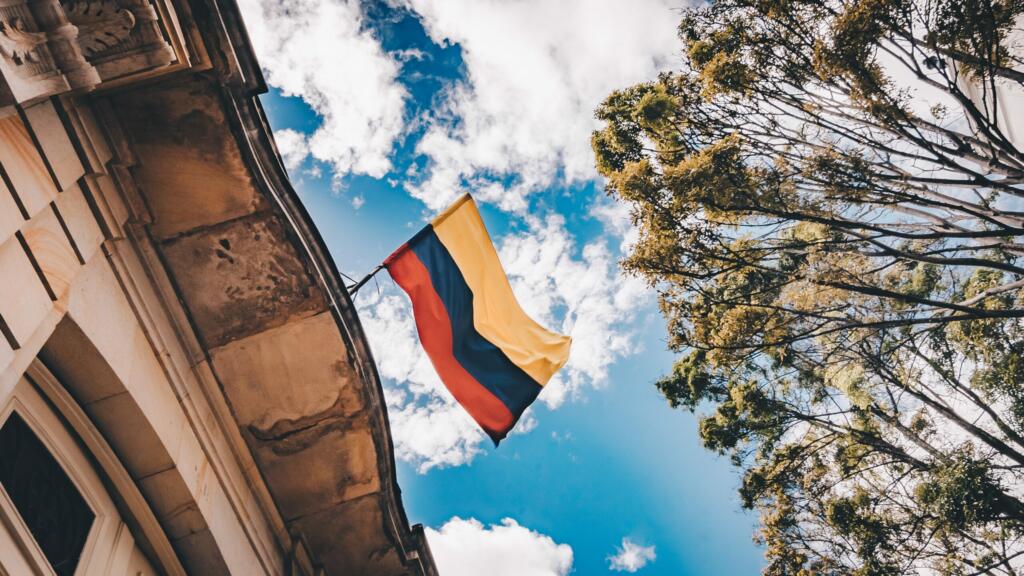
For the Colombian economy, coffee is extremely important; it’s one of the most important crops. Many farms are family-run or cooperatively owned, and the growers have decades of experience behind them.
Columbian coffee vs. Colombian coffee
All right, we’ve been curious about this one. We always get a little confused about Columbia vs. Colombia, after all. It probably turns out that when they named or registered their blend, they just hit the wrong letter on the keyboard for at least one of the companies.
However, if you’re looking for Colombian coffee, you would like to try the alternative spelling as well. A valuable distinction is that the nation is Colombia. Columbia is the studio for the movie.
But whatever you do, if you message/text anyone from Colombia, be sure to spell it correctly. They hate seeing Columbia!
What variations are there? things to watch out for in Colombia coffee
There are a few things to remember when you’re searching for the most appropriate Colombian coffee for you. Look for organic coffee if ecological values and sustainability are relevant. Here you can find the USDA, EU, and JAS certifications useful. Similarly, is your Rainforest Alliance coffee approved and non-GMO?
Where are the beans roasted, or are they sent to roasting facilities in the US as soon as possible after they are picked? Do businesses use small-batch, artisanal roasters, or are the roasters more commercial in size? Is it a medium-roast, or a dark-roast, that you’re looking for? And are you looking for a whole bean or a coffee that is already ground?
Does the company use arabica beans, or is there a little Robusta there? Then for the flavors. Which one is your preference? A citrus hint, maybe? A faint floral aroma? A bar of tiny chocolate or cocoa edge? Or the tones of earthy, robust nuts? These will all help you decide.
What makes colombian coffee so remarkable?
The climate and geography have an extremely beneficial influence on the coffee crops that are produced. There are also several other reasons why Colombian coffee has the “X factor” in it.
These include a distinctive acidity and sweetness equilibrium. You will find them in a Colombian blend or two, no matter what top notes or undertones you’re looking for in your coffee: nuts, fruit, herbs, chocolate, and cocoa.
Is coffee from Colombia the world’s best?
Colombia is possibly one of the largest coffee-producing countries globally, number three by some measures, number two by others. What is sure is that many of the coffee beans are hand-picked to produce Colombian coffee.
Small-batch artisan roasting is also a very popular coffee production process. Once again, personal attention to detail ensures that each coffee bean is roasted to perfection, and from those beans, the coffee workers get the very highest standards of freshness and taste. It is understood that Colombian coffee is a little more acidic than any other coffee.
Let’s get to business right away. We recognize that many of you need to read and run, so right now, let’s put you off your trouble.
Juan Valdez Coffee Organic Gourmet Medium Roast Ground Colombian Coffee

I want to introduce you to this brand first. Juan Valdez is synonym for coffee in Colombia. If you think Starbucks is everywhere, wait till you visit the cities of Colombia and Juan Valdez is everywhere.
The drink has a moderate acidity level, so it is very pleasant and heavy yet smooth. You could almost taste the rainforest. It’s a perfect blend for breakfast, with a full-bodied feel. Get this bag of coffee and feel a bit more exotic.
This 100 percent organic coffee is USDA Organic certified and complies with European Union regulations as well. It also satisfies the Japanese Agricultural Organic Standard (JAS). It ships in bags of 17.6-ounces each. Although there is no “best before” detail written on the packaging, both the day the coffee was roasted, and the expiry date are indicated by the lot number.
Café Sello Rojo Premium Colombian Coffee

And then last but not least, the Sello Rojo Colombian Coffee is crying out. Since 1933, the firm has been in operation and prides itself on its superior coffee.
You’ll find this brand also in Colombia’s supermarket. If you want to experience a true local favorite.
This ground coffee, not a blend, is made from pure Arabic Colombian beans. There is a balance between low acidity and sweetness in the body of this robust and very palatable coffee. It is a medium roast, fried, and then at the point of origin, vacuum-sealed. A fruity undertone is there.
Cafe Sello Rojo Cafe Colombiano comes right from the plantations, many of which are family-run. They are washed and then left to dry in the sun once the beans have been picked, sometimes by hand. This coffee has a graded rating of EXCELSO.
The techniques of small-batch processing mean that every bean gets personal attention. After picking, the processing takes place on the farms; beans are washed, fermented, and dried on farms where the employees have decades of coffee experience.
Folgers 100% Colombian Medium Roast Ground Coffee
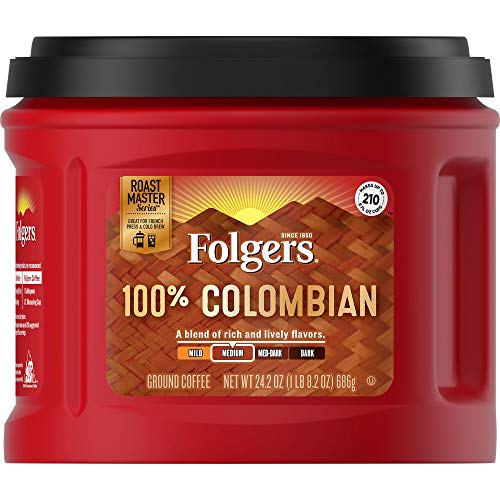
We all know and love consistency, and Ccoffee from 1850 by Folgers is finely ground, so if you’re using an espresso maker, a French press, a coffee machine, or a drip process, you’ll get a great cup of joe. It’s also going to fit for reusable K-cups.
It has a new, crisp flavor, with traces of citrus, made from arabica beans. The fire-roasted beans offer a fine, round flavor with a minimum acidity and bitterness to this beautiful, lively blend. Besides that, it’s useful for just about every process you can think of for coffee making.
Unopened, this Colombian coffee from Folgers will remain fresh as the day it was packaged for 12 months. When opened, store it in an airtight plastic bag, keep it in a cool, dry room, and check the date written on the bags for “best when used by.” We prefer to put labels on the bag, but it’s just us, you know.
If you’re hesitant to try something new, why not ease your way in with Folgers Colombian coffee?
Starbucks Medium Roast Ground Coffee — Colombia

And there’s Starbucks Colombia. It’s got nutty tones, with only a touch of citrus. It’s a rich, medium-roasted coffee, not too fantastic, but with a fresh taste and a touch of walnut.
Usually, this Starbucks Colombia ground coffee ships in packs of 6 12 ounce bags. There are many roasts available, from the soft, gentle blonde roast to the “don’t toy with me” flavor of the dark roast. We tasted the medium roast.
You’re going to get the best outcome with this cold water coffee that has been refined. For optimal results, use two tablespoons of freshly ground coffee per six ounces of water. If you’re brewing a bigger cup, mug or kettle, level up the quantity. This could seem a bit absurd, but if you use less coffee, you’ll end up with a more bitter-tasting brew.
Fresh Roasted Coffee LLC, Colombian Supremo Coffee

We would also like to announce our next rival- the Fresh Roasted Coffee LLC. Typically, this arrives as a whole bean medium roast, but it is also available as a pre-ground coffee if you choose.
This super-popular single-origin coffee, washed and dried on raised beds, has exquisite notes of honey and cherry. The grain is sustainably sourced, and all blending, roasting, and packaging occur in the USA.
This coffee is softly heated in an eco-friendly Loring Smart Roaster. Kudos to the smokeless environment, the use of this roaster not only reduces up to 80% of greenhouse pollution, but the beans’ overall taste is lip-smackingly good.
The whole bean variant usually ships in packs of 2lb or 5lb. It’s a very budget coffee, and three 12 oz bags are typically delivered in pre-ground packets. This blend will suit you straight to the floor if you like a feel of acidity with your coffee.
Stone Street Coffee Cold Brew Reserve Colombian Supremo Whole Bean Coffee
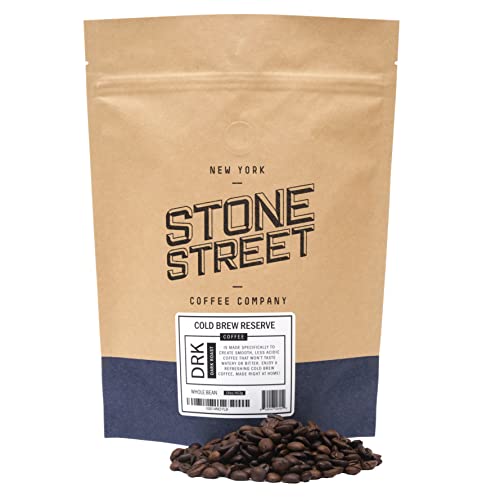
If you like fresh and natural Colombian coffee, this Colombian Coffee from Stone Street Coffee Roasters is the one you’ll love. Produced in South America from top-quality Arabica beans, this coffee’s taste is not for the weak.
The taste of this coffee is really strong, and it’s the perfect choice for those who want to roast at home. Opting for light to medium roast ensures that you can bring out the bean’s unexpectedly sweet flavor. These beans are pretty big, so don’t mind taking about five times longer to roast them than some other variants.
This coffee type comes in 1 lb, 2 lb, or 5 lb foil bags to pack in freshness. If you’re planning to try a 1 lb bag, you may want to learn that it could be resealed.
Java Planet, Organic Coffee Beans, Colombian Single Origin

Happy with your coffee gourmet resume? Then try Java Planet. This Colombian single-origin coffee employs organic Arabica coffee beans to make a tasty dark roast. It is USDA Certified Organic, Rainforest Alliance Certified, and Non-GMO. All the coffee is healthy for you, but you should be doubly sure that organic coffee is rich in antioxidants.
Mouthfeel wise, this medium-dark roast has a slight acidity, a decent mix, and a full-bodied, robust taste. There is no bitterness or burning taste that you might experience sometimes. These organic coffee beans are roasted in small quantities, maintaining freshness and flavor and enabling the roasters to maintain a specialist focus on the process.
This coffee comes from a family-owned and family-run business. They possess 20 years of experience growing gorgeous coffee produced without chemicals or pesticides. Columbia’s whole-bean coffee is shade-grown. The Coffee is sold in 1 lb or 2 lb bags, and each bag is marked with the date of roasting.
Don Pablo Colombian Supremo
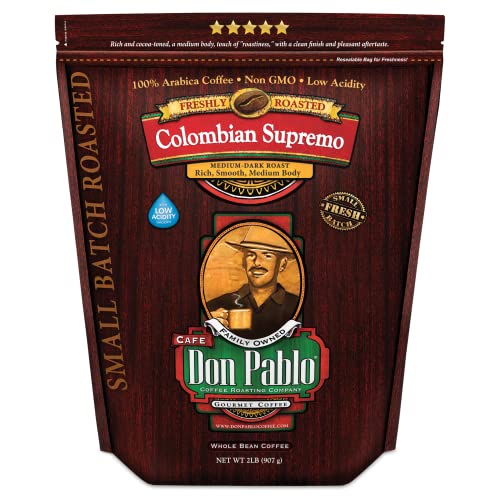
For our next pick, Cafe Don Pablo Gourmet Coffee, we’re sticking with Colombina Supremo. This is a multi-textured coffee that is wonderfully rich, mild, soft, and with more than a touch of cocoa, walnut, citrus, and chocolate. This is a medium-dark roast with low acidity levels and a medium body. Levels of acidity are low.
The Arabica beans are GMO-free and roasted by artisans in tiny quantities, meaning the freshness levels are as good as they can be. Sugar concentrations are elevated in these beans, and when the coffee is ground, they caramelize slightly.
In the drip soil, Don Pablo Colombian Supremo is also available. Enable one tablespoon, level to very slightly heaped, of the coffee for every six ounces of water for a palate-pleasing cup of coffee. A rich, intense cold brew is also made.
In the USA, beans are roasted in small batches to order, so the freshness and flavor are preserved. The attention to detail of this family firm ensures that you know that personal attention has gone into every cup of this extremely pleasant coffee. This medium-dark coffee ground roast is shipped in 2-pound containers.
Koffee Kult Colombia Coffee Beans Huila Region Medium Roast
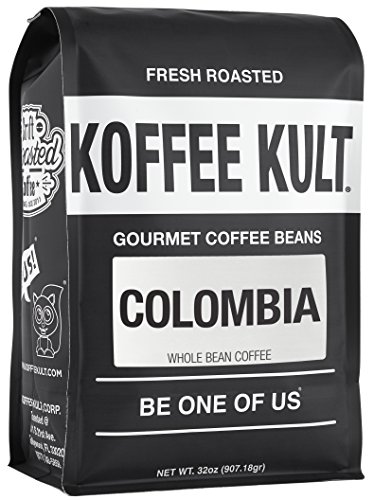
You’ll love this gourmet coffee from Koffee Kult if you have trouble getting out of bed in the morning. Even the chocolatey scent will get you going to the coffee maker or the kettle as soon as you can. There are cinnamon tips, too.
This is a bold-bodied drink with low acidity. The beans are organically sourced and derived from the high Hula mountains. In small batches, they are roasted fresh and packaged directly after the roasting process.
Through multiple batches, this coffee is consistently gorgeous. In 2, 24, or 70-kilo capacity machines, batches are roasted. From a single small roaster to a multi-roaster operation that retains its environmentally friendly approach, the family-owned and operated business has expanded. In Hollywood, Florida, roasting takes place.
These 100 percent Arabica beans are perfect for drinks focused on espresso, including cappuccinos, lattes, and espressos, of course. They are non-oily so that they can work with a wide variety of grinders and coffee makers. Even a decaf version is available (though we tried the full caffeine version). Usually, this whole Colombian coffee bean is shipped in 32 ounces, 1 pound, or 80 ounce sacks.
Colombian Supremo Coffee by Volcanica
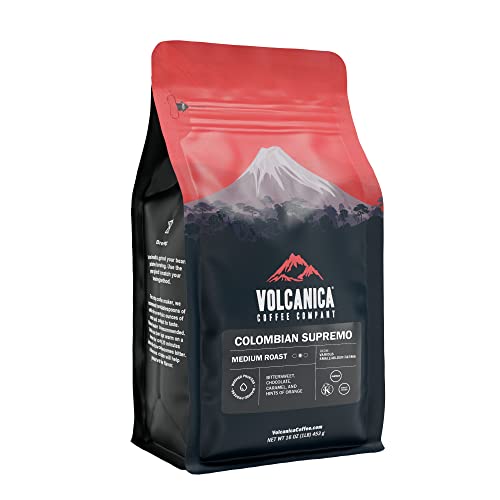
If you waited this long and read the whole article before purchasing the first recommendation. We wanted to hid this from everyone. There’s no doubt that Volcanica is one of those brands that proud themselves from roasting before delivery for the freshest coffee, and many other benefits.
They are fair trade, freshly baked, and shade-grown. Not only is this Single Origin coffee Fair Trade; it is also certified and organically grown by Rainforest Alliance.
In terms of its acidity levels, this coffee is medium-sweet, and the fact that its shade-grown gives it a smooth and light body. It has a powerful, nutty smell, but it’s not so overwhelming that it won’t make you enjoy the taste. There are also signs of berries and flowers. This blend’s Colombian Andean Estate credentials mean you can enjoy your cup of coffee knowing it’s been made ethically.
The beans for this coffee are grown on volcanic ash soil between 1,650 and 1,800 meters above sea level. In Atlanta, Georgia, the beans are roasted, and the light brown look is due to the medium roasting process.
Before being packed and immediately sealed, the beans are freshly roasted, so freshness is guaranteed. In total, there are over 130 coffees in the range, and the company produces, among others, decaffeinated, flavored, and peaberry coffees. Also evident is the family approach of the company: they began life as a small garage operation. If you want to go beyond the Supremo, you can try Volcanica Colombian Peaberry Coffee.
Disclaimer: This post contains affiliate links, which means I may receive a small commission, at no extra cost to you, if you make a purchase using these links. Remember to support us by purchasing through the Amazon/Walmart/Impact Radius links provided. Last update on 2024-04-18 / Affiliate links / Images from Amazon Product Advertising API
Disclosure: No compensation or free products were received in exchange for writing this review.

Editorial Staff
The editorial staff at Crazy Coffee Crave is a team of coffee enthusiasts & Baristas who enjoy the one thing we all think about as soon as we get up in the morning. Trusted by thousands of readers worldwide.