If you’ve been drinking coffee for any length of time, you probably know about burr grinders. These are the types of coffee grinders that are designed to produce a consistent grind from your beans.
This is much different than whirring them around in a blade-style grinder and hoping for the best. These grinders have two rotating discs with sharp teeth, which are known as burrs. The unique design of these grinders produces a more consistent grind than other models.
We’ve reviewed some of the best burr coffee grinders on the market and narrowed it down to these top 5 picks based on factors like performance, ease of use, features, design, build quality, and price.
Best Burr Coffee Grinder reviews
To assist you in selecting the ideal model, we’ve put together this comprehensive buyer’s guide that highlights the most crucial factors to consider.
Capresso 560.01 Infinity Conical Burr Grinder
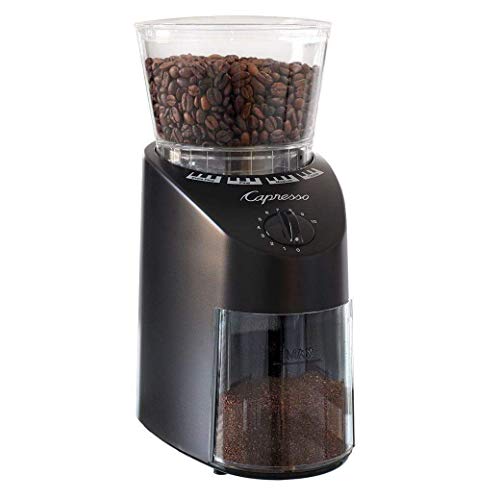
This machine is perfect for the price. We praised its precision, low-speed motor, and ease of use.
Multiple gear motors spin 40mm conical stainless steel burrs at 450 RPM. That’s a low-end burr grinder. It reduces friction heat and prevents early bean oil extraction. Motor and gearbox hum.
Machine turns off if hopper isn’t locked.
The bean hopper holds 8.8 ounces. The grounds bin holds 4oz. Plastic is static-prone.
This small machine is just over 10 inches tall and 5 inches by 7.75 inches. It’s 3 lbs. and should fit in your kitchen cabinet.
As with another burr grinder, the infinity’s top burr is removable. Cleaning should be easy. The bean hopper’s shape is difficult. Bean hoppers make brushing difficult. Because it’s plastic, you might clean it.
Precision steel burrs and a low RPM motor are priceless. They’re durable. ABS housing may not withstand rough handling.
Capresso’s Infinity model has a heavy-duty zinc die-cast casing. Metal will outlast ABS plastic.
Capresso Infinity is user-friendly. This coffee grinder has a 5-to-60-second timer.
Burr grinders outperform blade grinders. Extra-fine, fine, standard, and coarse grind categories are marked on the machine. Each category has four micro settings, for a total of 16 grind settings. The Infinity’s finest setting produces fine enough grinds for a pressured portafilter. It makes Turkish coffee.
The coarsest grind setting is good for a French Press.
It’s hard to find a coffee grinder under $100 that consistently produces high-quality grinds. The Capresso Infinity’s low price makes us overlook its flaws.
Pros
- Cleaning is easy with the upper conical burr removed.
- The gear reduction motor produces less heat and keeps optimum flavor and aroma.
- With 26 built-in grinding settings, it’s ideal for any brewing procedure.
- Burrs of exceptional quality and precision.
Cons
Because the grinder’s housing is constructed of ABS, you should be cautious when transferring it from one portion of the kitchen counter to another. In addition, when it comes to cleaning, it is not the most user-friendly grinder.
- Cleaning is difficult
- Housing might be more durable
KRUPS 8000053978 GX5000 Professional Grinder

Krups Robert created this company in 1846. Krups GX5000 is a beautiful combination of traditional and modern design. This KRUPS model is a wonderful alternative if you’re on a budget but still want freshly ground coffee.
Given its low price, it’s remarkably sturdy and comes with a range of grind settings.
Krups’ 45 settings are divided into nine sections. Each stage customizes the coffee’s texture. It’s friendly. Simply choose your desired setting to produce the ideal cup of coffee.
The Krups espresso machine includes a conspicuous, easy-to-use front knob.
Adjustable from 2 to 12 cups. Even if your whole extended family is there, you may still impress them by offering freshly ground coffee with dessert.
Krups burr coffee grinders use the greatest mill technology. So, it uses a burr. This conical burr grinder doesn’t overheat, unlike others.
Lower motor speed and less heating help burr coffee grinders preserve fragrance and taste.
Pros
- Elegant design
- A silent operation
- Burr mill with 2-12 cup setting is simple to operate
- Keeping the coffee flavor and aroma
- Auto-stop system with a high level of safety
- Grinding equipment that is dependable and long-lasting
Cons
- The grind can be irregular at times
- There is no cleaning brush included
- With a fine grind, it can be difficult at times
- No cup that can be removed
- Cleaning is time-consuming
Rancilio HSD-ROC-SD Espresso Grinder
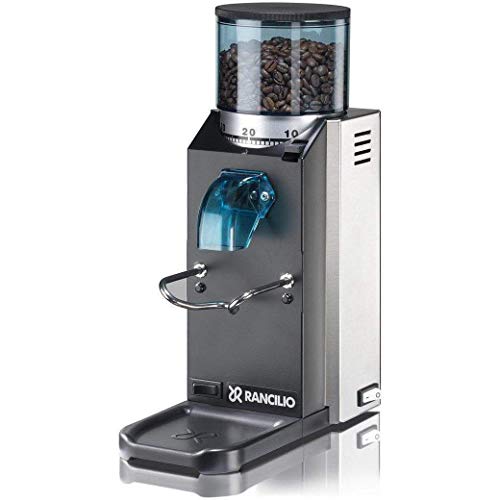
This is for coffee shop owners. If your café serves espresso and finely ground coffee, this product will pay for itself. Because of its unique features, steady performance, and ease of use, this grinder is beginner-friendly and requires little maintenance experience.
Rancilio is a recognized coffee machine maker due to its consistency and reliability.
This black and stainless steel grinder is tough as nails.
The 50mm flat tempered steel burrs and 140-watt motor can handle commercial loads, so they’re perfect for home use. The 1725RPM burrs are fast for a home grinder, but they remain cool and quiet.
Rocky’s motor features a thermal overload shut-off. This can happen if you grind too much coffee or if a stone gets trapped in the burrs. This keeps the burrs sharp.
No doser or ground bin are included. Doserless grinders offer more control and versatility. Rocky SS may have a doser. A lever gives the same number of grounds every time. It must be filled to work, and it holds stale ground coffee.
You’ll adore the Rancilio Rocky grinder’s industrial-chic black front panel and tinted blue plastic pieces.
The rocky isn’t much bigger than other burr grinders. It measures 4.7 x 9.8 x 13.8 inches, larger than typical grinders. It weighs 15.4lbs.
It needs little maintenance to work well. Simply clean every couple of months. Then, adjust your coffee grinder every year or two, depending on how much you grind.
Rancilio’s Rocky grinder lasts. Everything is durable, from the motor to the mind. Burrs can crush any bean kind.
This expensive equipment has several extra features that may make grinding simpler. A pulse grinding button is on the front left. After pushing the grind button, ground coffee comes out.
Rancilio Rocky SD excels here. Commercial-grade burrs offer consistent grinding in any setting. In addition, 55-step settings let you switch from French Press to espresso.
The Rocky grinds fine enough for a non-pressurized portafilter. Ten possibilities are for espresso grinds.
Professional baristas or coffee nerds may not mind spending so much on the Rancilio Rocky. On the other hand, this grinder might be used for “prosumer” coffee equipment. Consider whether its consistency and adaptability are worth the price.
Pros
- The motor is quiet and powerful
- Conical burrs that are dependable
- Easy-to-operate
Cons
- Pricey
- Coarse grinding it’s not ideal
Baratza Encore Burr Coffee Grinder
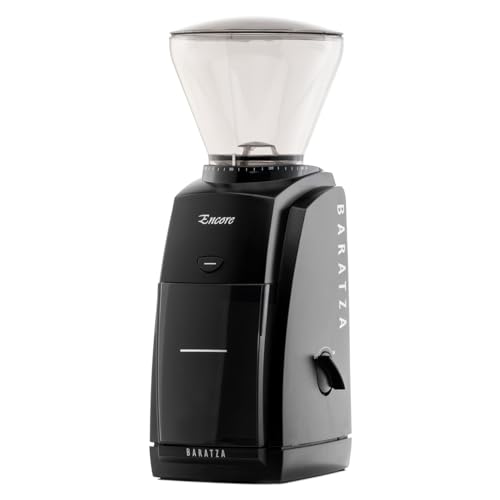
The Baratza Encore is a type of coffee grinder that is considered by some to be the best of its kind on the market. It is recommended for both personal and commercial use, and it comes with a warranty policy and customer support.
This grinder is designed for people who are just starting to learn about coffee. It has some basic features, but it’s still a good quality grinder.
The Encore’s 40mm conical stainless steel burrs rotate at a consistent 550RPM thanks to its robust, high-torque DC motor and redesigned gearbox. This modest speed in the grinder decreases heat, noise, and static while ensuring that the beans feed smoothly through the burrs.
The machine has a built-in safety feature to prevent the motor from overheating. The hopper can hold up to 8oz of beans and the ground bin can hold 5oz. The machine is made of high-grade plastic and has a sleek, black finish.
The Encore is a coffee grinder that was made to fit under most kitchen cabinets. It is small and light, measuring 4.7” x 6.3” x 13.8” (WxDxH) and weighing 7 lbs. The top burr can be removed without a tool, and the burrs can be brushed easily. The hopper and grounds bin can be removed for fast cleaning.
The Encore is a coffee grinder that is not as advanced as some other grinders, but it is still simple to use once you know how much coffee you need.
The Encore has a knob that you can turn to adjust the grind size. It has 40 different settings, so you can make your coffee grinds as fine or as coarse as you want. The Encore can grind from 250 microns to 1200 microns, which means it can make espresso grinds or French Press grinds. It can even make the extra-coarse grinds needed for cold brew coffee.
The Encore is a more expensive grinder than most other entry-level grinders, but it is not the best grinder on the market. However, it is a good buy for the price and will last for several years.
Pros
- Simple to use
- There are a lot of different grind levels to choose from
- Very strong
Cons
- There isn’t a cup-setting feature
- Messy
Breville BCG820BSSXL The Smart Coffee Grinder Pro
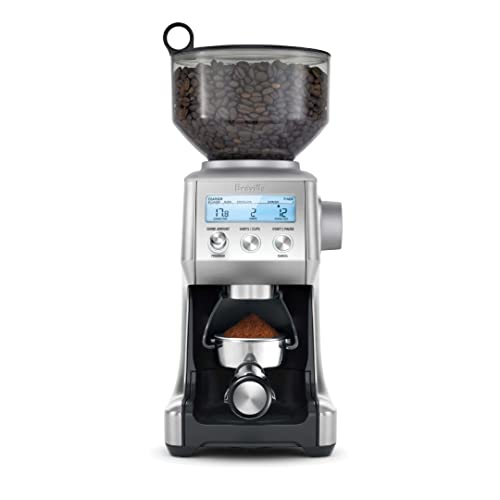
The Breville Smart Grinder Pro is a high-end device that is noteworthy in terms of design and general performance. It is more expensive, but its self-adjusting functions and a variety of grind levels make it a worthwhile investment.
This coffee grinder has steel burrs that rotate quickly to grind coffee beans. The motor is a little noisy.
It has two different sized portafilters (one for 50-54mm and one for 58mm) and a magnetic base plate.
The hopper capacity of this burr grinder is 1 pound (18oz). The hopper’s lock/unlock system is one of our favorites. The hopper shuts off the bottom half in the locked position, ensuring that the beans in the hopper stay in the hopper.
The plastic grounds bucket is a container that is designed to fit snugly beneath the spout of a coffee machine and has an airtight top for storing ground coffee. It also has graduated markings on the side that show how many cups/shots of grinds are inside.
The machine is big and you will need to make space for it. It is 8.5 x 12.5 x 16.3 inches and 6.4 pounds.
The Smart Grinder Pro is a coffee grinder that is very well made. It is strong and durable, and will last for many years.
The “smart” feature on the Smart Grinder Pro lets you control the grind setting, grind time, and quantity of shots or cups with a button/dial.
The Breville burr grinder has 60 distinct grind settings, which means it can be used for different brew styles. It is also very consistent and provides good control.
The coffee grinds are always the same size, no matter what setting you use. There are 10 settings for how fine or coarse you want the grinds to be, and you can change them without having to move up or down a whole setting.
This grinder is very affordable and has a lot of different settings to choose from. It also has many practical functions.
Pros
- 60 grind levels
- Silent, powerful motor
- Simple to use
Cons
- Expensive
- Warranty and customer service might be better
Do you even need a coffee grinder?
If you want to grind your coffee at home, you’ll need a coffee grinder. All food processors, micro choppers, and blenders are unreliable. Despite its resemblance to food processors and tiny choppers, blade coffee grinders have blunted edges that do not overwork the beans.
Their container is also smaller, enabling for more efficient and uniform handling of a lesser quantity. Most importantly, when coffee beans are ground, oils are generated, which often discolor the container and remain there. Your food processor, micro chopper, or blender will likely continue to smell like coffee no matter how many times you clean it.
What is the best kind of coffee grinder?
There are two ways to grind coffee: with a blade grinder or with a burr grinder.
Blade grinder
The function of a blade grinder is similar to that of a food processor, but with blunted edges. The blade revolves to cut the coffee beans. The beans we tested were noisy when they were whole, but when they were broken down, they were quieter. Blade grinders are smaller and more compact than burr grinders in general, but they need some effort to produce evenly ground coffee of the right size.
Burr grinder
A burr grinder grinds coffee beans by passing them between two metal or plastic pieces, similar to a pepper mill. The grind size may be accurately changed depending on how many settings the grinder has, and the results are very consistent, contributing to a fuller, more balanced taste. Blade grinders are larger, noisier, and frequently more expensive.
Manual grinder
Grinders that are manually operated. Manual grinders are a more compact and affordable option, but getting the proper setting isn’t always easy, and grinding takes much longer than we’d want. They, too, used two burrs to grind beans, similar to a pepper mill. Manual grinders hold a tiny amount of bean and grind with multiple turns of the handle. Hand grinders are nearly silent when compared to blade and burr grinders.
Electric coffee grinder
In contrast to a manual grinder, an electric coffee grinder is a machine that does the work for you. Simply place your coffee beans in the electric coffee grinder, adjust the coarseness dial, choose the amount of ground coffee you require and click the start button.
Electric coffee grinders are perfect for those who want a good cup of coffee but don’t want to spend the time and effort to make it.
Commercial coffee grinder
It may be time to switch to the best industrial coffee grinder if you require a coffee grinder that can keep up with your growing demand. A commercial coffee grinder, whether you run a coffee shop or are a coffee roaster in need of a more powerful grinder, is the next step that will allow you to grind with consistency and speed.
Espresso coffee grinder
You probably own or will own an espresso machine if you’re seeking the best espresso coffee grinder. A drip coffee grinder, on the other hand, is not the same as an espresso grinder.
To be called an ”espresso grinder”, these machines must grind fine enough for espresso, which most grinders can’t. Most people can grind fine, but not fine enough for a shot of espresso with a thick, crema-filled crema.
What is the importance of grind size?
Coffee brewing involves four variables. Time, temperature, ratio, and grind size are important. Extraction grinds size. How much coffee to brew. Finer grind speeds extraction. Coarser grind takes longer.
We need to find the right grind size to get enough coffee without too much. Too fine and the coffee will turn bitter. If you don’t grind the coffee finely, its acidity becomes sour.
If you get grind sizes, brew time, and water temperature right, you’ll have a sweet treat.
Grinding size
It’s vital to achieve the most evenly ground coffee possible while grinding coffee to extract the most flavor during brewing. Varying-sized pieces require different brewing times, similar to cooking; coarse ground coffee requires a longer steeping time than finer ground coffee and vice versa.
Coffee that is unevenly ground can result in a weaker cup than desired. The appropriate grind sizes for several coffee varietals are listed below. Remember that the rougher the grind, the stronger the flavor, and the finer the mill, the longer (and softer) the brew time.
- Very fine: Turkish coffee and strong espresso
- Fine: Espresso
- Medium fine: Light espresso and strong pour-over
- Medium: Light pour-over and drip coffee
- Coarse: French press
- Very coarse: Cold brew
Burr coffee grinder buyer’s guide
Choosing the best coffee grinder is more difficult than it appears. Yes, there are some inexpensive products on the market, but that does not mean that they are all worthwhile.
To assist you in making a decision, we’ve compiled a list of the five most important qualities to consider when purchasing a burr coffee grinder. Let’s take a look at what we’ve got.
Grind settings
The number of grind settings is perhaps the most crucial characteristic to consider when selecting the ideal grinder. A model with at least 10 different grind levels is what you should be looking for.
This will provide you with a wide range of options, including Turkish excellent coffee and coffee for French press makers. The Baratza Encore and Breville Smart Pro are ideal examples because they provide the most grind settings.
Speed
It’s also a good idea to check out the different speed options to make sure you’re getting ground coffee with the right flavor and aroma. Look for versions with at least three different speed options.
The RPM of a grinder refers to how man times the burr of the grinder rotates in one minute. But what does this number mean in terms of our delicious coffee? So there’s considerable controversy about whether or not a grinder’s RPM affects extraction.
Even while the results are still unclear, one thing is certain: grinders with a higher RPM grind faster. Flat burr grinders have higher RPMs, as you may have seen.
Because they rely on centrifugal force, they require this extra speed to function. As a result, flat burrs will never be seen on a manual grinder. Imagine trashing a hand grinder around 1725 RPM.
Storage capacity
The amount of fresh coffee beans that can be placed in a container to be ground later is determined by its storage capacity. Anything less than 8 ounces should be avoided. The Breville, for example, has a storage capacity of 18oz., which is excellent and sufficient for commercial use.
Manual vs. electric burr coffee grinders
While both types of grinders may ground coffee effectively, manual grinders produce coffee at a slower rate. On the other hand, because you are spinning the crank handle mechanism at your desired pace, you may have better control over the operation.
An electric coffee grinder, on the other hand, usually has more settings and safety measures.
Burr vs. blades
To be honest, the first coffee grinder I bought was a blade grinder. At the time, I didn’t know any better. But then I noticed the grounds weren’t very consistent, and I remembered from the study that consistent grounds are required for good coffee.
Conical burrs are designed to produce a consistently smooth, even, and consistent grind. This allows for consistent taste extraction from the coffee throughout.
Consider this: even a small amount of overly fine grounds will muddy a french press coffee, whereas a small number of coarse grinds can weaken an espresso. To brew truly good coffee, you’ll need a conical burr grinder. You don’t have to spend a fortune to do so, as you can see above. Burr grinders are offered in two price ranges: low-cost and high-end.
Flat and conical
Flat burrs are made up of two ring-shaped burrs that circle parallel to each other, but conical burrs have a core cone-like fitting that revolves against the outer burr. There are arguments on both sides about which type is more precise and efficient. Even though there isn’t much in it, both perform with amazing precision.
Burr size
The burr size, in the end, influences the grinder’s overall precision as well as its efficiency. Burrs with a diameter of 50mm appear to be ideal.
Price
As with everything that requires high-quality components, a fine coffee grinder in the UK can be costly. Depending on your needs, however, there is a grinder for any budget.
Cleaning a burr grinder coffee
Making coffee is easy once you find the right grinder setting. When switching from drip to pour-over coffee, you may need to adjust the coarseness level. You don’t clean your coffee grinder properly and rarely. Regularly cleaning your coffee grinder removes unwanted oils and coffee particles.
- Before you begin, remove any surplus coffee beans from the grinder as well as any coffee grounds in the catch basin. One cup of grind should be run through the grinder at a medium coarseness setting, then discarded.
- Put two cycles of coffee beans through the grinder at the same setting. The more coffee beans you use, the less probable any particles are to remain in the grinder. Even though the powder is harmless, you should clean the grinder thoroughly because it may impair the coffee’s flavor.
- To remove any residual particles, wipe clean the coffee grinder, including the hopper, spout, and doser. It’s worth noting that larger commercial grinders may demand a greater amount of grind and coffee beans.

- In standalone coffee grinders, it removes coffee residue and oils (not for super-automatic espresso machines)
- Coffee grounds are absorbed and loosen using this patented, all-natural, food-safe, and gluten-free pill.
- Grinders are effectively cleaned without the need to disassemble burrs or casings.
- Use regularly to ensure optimum sanitation and consistent grinder performance.
- When transitioning between ordinary, decaffeinated, and flavored coffee beans, this is a great way to avoid taste transfer.
Burr coffee grinder FAQs
What is a coffee grinder?
We use a coffee grinder to smash roasted whole beans into a size appropriate for making coffee. It can be controlled manually or automatically. A coffee grinder typically has a bean hopper that holds whole coffee beans, a blade or burr grinding mechanism, and a grounds chamber that collects the ground coffee. The grinding mechanism on manual grinders is controlled by a handle. Automatic grinders use a timer or a start/stop button to work.
What is the advantage of grinding your coffee?
Apart from the fact that you’ll be drinking coffee instead of the typical sour/acidic flavor found in ready-ground coffee, you’ll also be able to customize the texture and fineness of your coffee using the grind level settings.
How do I clean my coffee grinder?
While the procedure varies depending on the type, the first step is to disassemble the grinder by removing the burr, container, and ground coffee basket. After that, use a sponge and mild soap to wash it under lukewarm water.
What grind size should I use for my coffee?
This all depends on your preferences, which is why devices like the Baratza Encore, which has up to 40 grind levels, are worth investing in. This allows you to grind Turkish fine, cold brew, AeroPress, and even French press coarse coffee with precision.
Can I grind my coffee in a blender or a food processor?
You can in most circumstances, but because processors and blenders employ blades rather than burrs, it won’t be as exact as a decent coffee grinder.
Are manual coffee grinders better than electric ones?
This also depends on preferences and the amount of time you’re willing to put into coffee grinding. Yes, a manual grinder gives you greater control, but an electric grinder will almost certainly give you more grind settings.
Conclusion
We hope our buyer’s guide and recommended models will help you better understand what to search for.
Our personal favorite is the Baratza Encore Coffee Grinder, which is a low-cost tool that is suitable for both home and commercial use. It has a wide range of grind settings, a simple user interface, and quick customer service.
We hope you found our grinder reviews helpful and that you are one step closer to selecting the best burr coffee grinder to accompany your coffee machine.
Disclaimer: This post contains affiliate links, which means I may receive a small commission, at no extra cost to you, if you make a purchase using these links. Remember to support us by purchasing through the Amazon/Walmart/Impact Radius links provided. Last update on 2024-04-25 / Affiliate links / Images from Amazon Product Advertising API
Disclosure: No compensation or free products were received in exchange for writing this review.

Editorial Staff
The editorial staff at Crazy Coffee Crave is a team of coffee enthusiasts & Baristas who enjoy the one thing we all think about as soon as we get up in the morning. Trusted by thousands of readers worldwide.